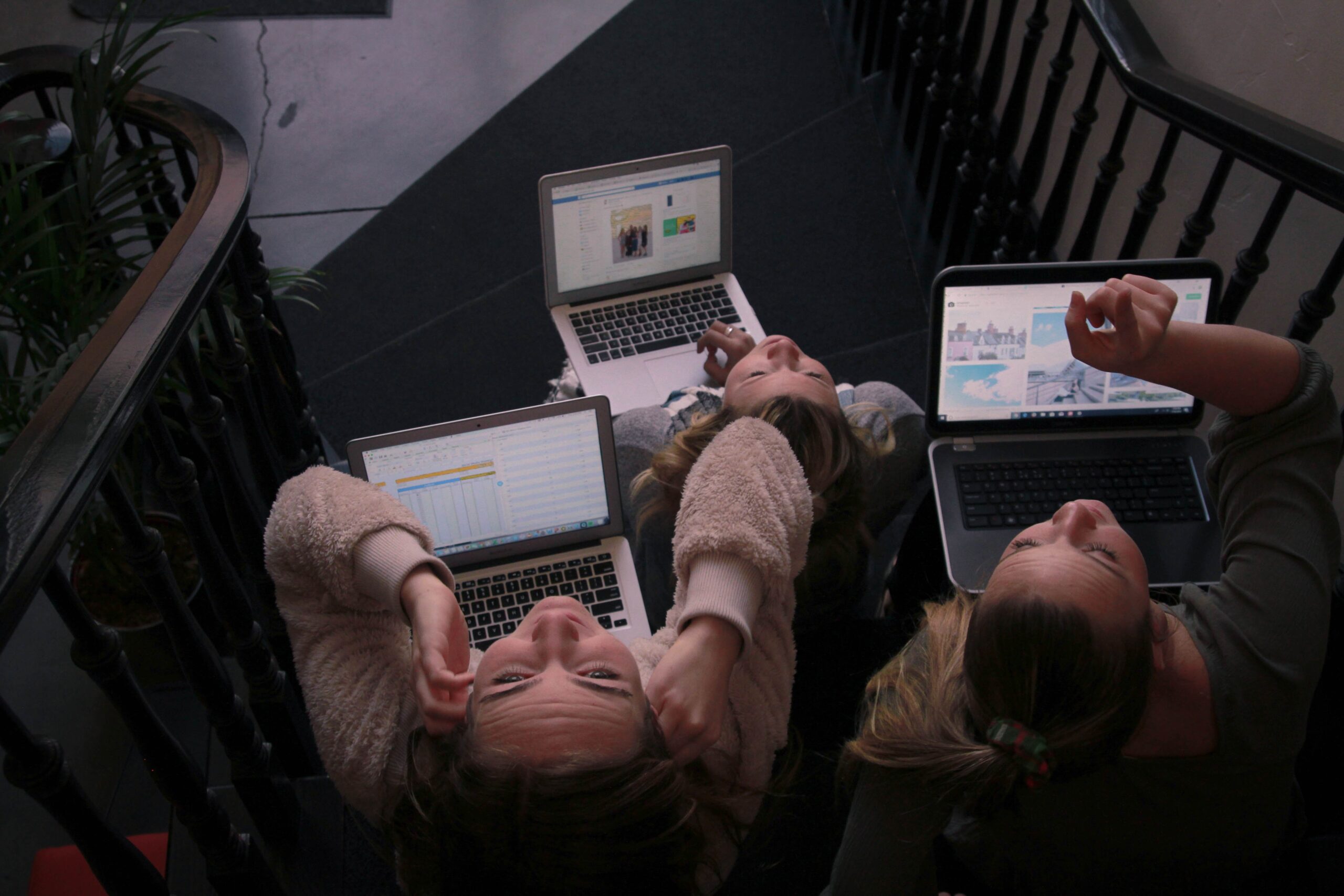
Parental anxiety and screen addiction influence children’s addiction. In the contemporary world, screens have taken a predominant place in our lives. Televisions, smartphones, computers and tablets — we are constantly surrounded by these technological tools that make life easier, but can also present dangers. One of these dangers is screen addiction, a phenomenon that affects more and more people, adults as well as children. A scientific study (https://www.ncbi.nlm.nih.gov/pmc/articles/PMC9566204/) has shown that if parents are addicted to screens and anxious, their children are also likely to become addicted to screens.
It is important to understand the concept of screen addiction. It is not simply frequent use of digital tools, but rather developing a true addiction, to the point that the individual feels uncomfortable, even anxious, when they cannot use these tools. This addiction can lead to various problems, ranging from sleep disturbances to more serious health issues such as obesity or vision disorders.
Parents play a crucial role in the development of this addiction in their children. Indeed, children are naturally inclined to imitate their parents’ behavior. If parents spend a lot of time in front of screens and appear anxious when they cannot do so, it is very likely that their children will adopt the same behavior.
Moreover, a family where parents are addicted to screens is likely to be one where communication is limited. In many cases, screens serve as a substitute for face-to-face communication. Children therefore grow up in an environment where the norm is to spend time in front of a screen rather than interact with others. This can lead not only to screen addiction but also to socialization problems.
Furthermore, anxious parents are often more likely to resort to screens as a way to entertain or calm their children. In an attempt to manage their own anxiety, they may unconsciously encourage their children to use screens as a form of self-soothing. This can easily lead to long-term dependence.
Definition of anxiety:
Anxiety is an emotion often experienced as unpleasant that corresponds to the more or less conscious anticipation of a danger or a forthcoming problem. Anxiety is a normal phenomenon, present in all individuals. However, it can take on an excessive and pathological character in different situations: we then speak of anxiety disorders.
Subjects suffering from anxiety disorders are overwhelmed by this feeling of discomfort or fear secondary to an excessive anticipation of potential difficulties even before problems have occurred, or even before the subject has precisely identified what they fear.
Source : https://www.anxiete.fr/troubles-anxieux/trouble-anxieux-generalise/anxiete/
Mental health professionals sometimes speak of "fear without an object".
It is also essential to note that screens are not inherently bad. They can be valuable learning tools and offer opportunities for entertainment and relaxation. However, as with everything, excessive use can be harmful. It is therefore crucial to set clear limits and promote a healthy, balanced use of screens.
In conclusion, screen addiction is a complex problem that is often the result of several factors, including parental behavior. It is therefore essential for parents to be aware of their own screen use and the signals they send to their children. It is also crucial to promote healthy screen use and ensure that children have access to a variety of off-screen activities. By adopting a balanced and mindful approach to screen use, we can help prevent screen addiction in children and promote their overall well-being.
Reference :
https://www.ncbi.nlm.nih.gov/pmc/articles/PMC9566204/
https://www.anxiete.fr/troubles-anxieux/trouble-anxieux-generalise/anxiete/