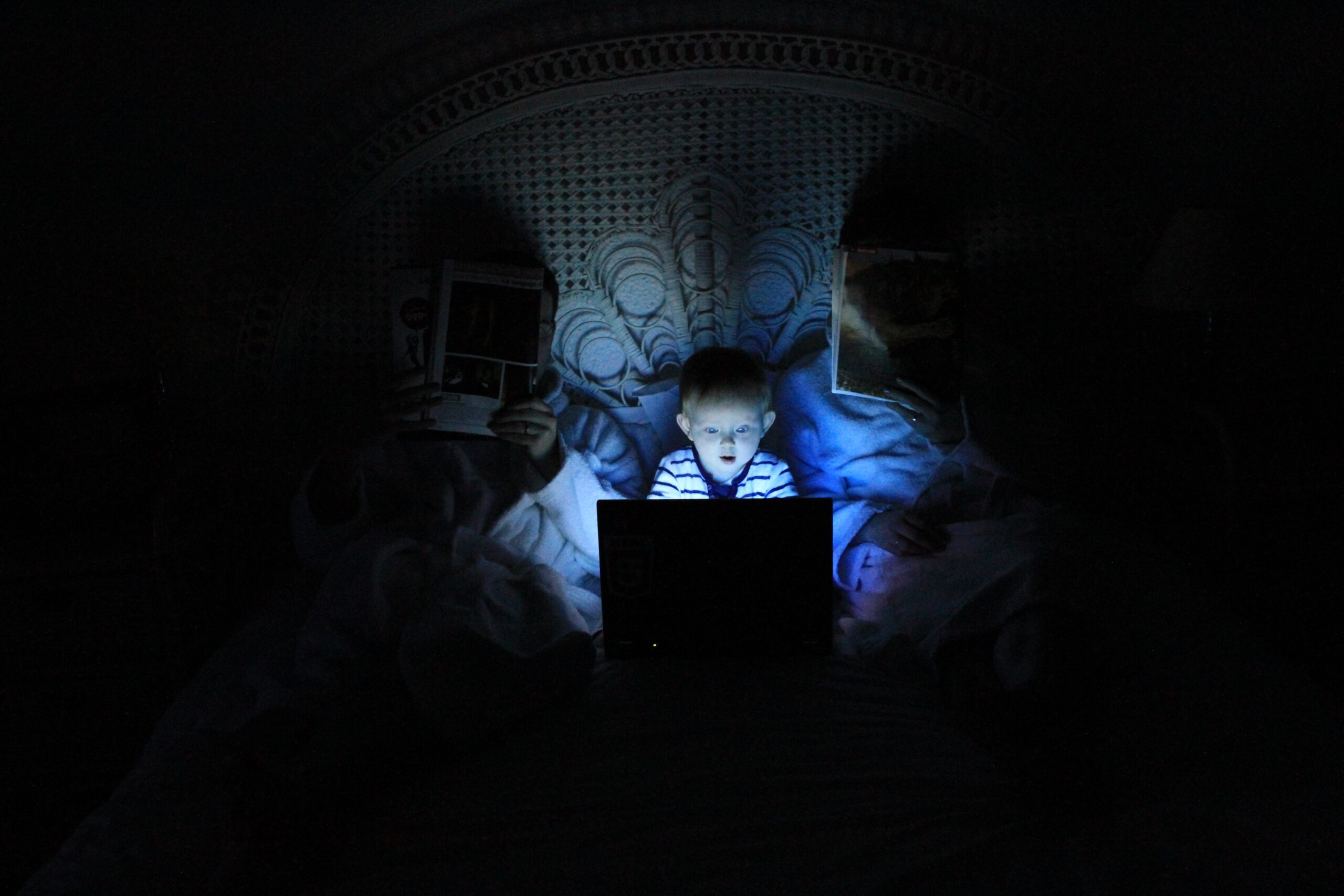
Social isolation is sometimes linked to excessive screen use. The latter has become a growing concern, especially among children. Computers, touch tablets, and other devices are everywhere. This article explores the various impacts of screens on children. The focus will be on the potential dangers of social isolation.
Screens and their impact on children
Nowadays, from a very young age, children are exposed to screens. They grow up surrounded by all this technology. This omnipresence can have various consequences on their physical and mental health REF [^1^]. Harmful effects on brain development have also been observed.
Vision problems caused by screen use
Too much time spent in front of a screen can lead to vision problems, such as eye strain and myopia. It is necessary to limit screen time among young children to preserve their visual health.
Sleep cycle disruption due to screens
The blue light emitted by screens can disrupt the sleep cycle, making it difficult for children to fall asleep and stay asleep REF [^2^]. The production of melatonin, the hormone responsible for regulating sleep, can be suppressed. Thus, it becomes harder for children to fall asleep and to benefit from restorative sleep.
How to reduce the effects of blue light?
Using blue-light filters and limiting screen use before bedtime can help reduce its effects on children's sleep.
Lack of physical activity and weight gain
Excessive screen use is often associated with a sedentary lifestyle. The risk of weight gain and obesity in children is then increased. Physical activities are essential for overall health and well-being, and contribute to the development of fine and gross motor skills.
Social isolation linked to screen exposure
Children who spend too much time in front of screens may neglect their social relationships, leading to isolation and loneliness REF [^3^].
How excessive screen use can lead to social isolation
Social isolation can have harmful consequences for children's social and emotional development. Their ability to form and maintain healthy relationships is thus compromised.
Consequences of social isolation
Isolation can affect children's self-confidence and their ability to interact with others, which is necessary for their social and emotional development.
What effects do video games have on children?
Video games can have varied effects on children, ranging from improvements in cognitive skills to an increased risk of aggressive behavior REF [^4^]. Thus, it is up to parents to monitor their nature so that their children derive only the beneficial effects from this activity.
Negative effects of video games
Excessive use of video games can contribute to behavioral and concentration problems, as well as risks to children's mental health. Young children who spend too much time in the virtual worlds of video games may gradually lose contact with the real world.
How to limit children's exposure to video games?
It is essential to set clear rules and encourage children to take part in other activities to reduce their exposure to video games. .
What is the point of restricting screen use?
Restricting screen use in children is essential to preserve the health and well-being of children and adolescents. It also helps encourage healthy development.
The importance of managing screen time well
Appropriate management of screen time is essential to prevent negative effects on children's health and well-being. Adults can also empower young people by entrusting them with the management of their screen time.
How to identify signs of excessive screen use
Parents should watch for signs of excessive screen use, such as fatigue, irritability and lack of interest in other activities.
Practical tips to restrict screen use
Adults can implement practical strategies to restrict screen use to reduce screen exposure time. Parents can protect their children by setting time limits. Creating screen-free zones at home. This also involves encouraging screen breaks and organizing activities together.
Dangers of screens
Excessive screen use presents various risks to children's health and well-being. To minimize these risks here are some recommendations adapted to each age group :
Here is a summary of these recommendations by age group :
From 0 to 3 years :
- Avoid screen use completely.
From 3 to 6 years :
- Very limited and occasional screen use, but it is preferable to abstain completely.
From 6 to 9 years :
- Limit screen time to one hour per day.
- Use mainly for educational purposes.
- Adult supervision required.
From 9 to 12 years :
- Access to educational screen content, without Internet connection.
- Adult accompaniment necessary.
From 12 to 16 years :
- Controlled use of the Internet.
- Adult monitoring required.
From 16 to 18 years :
- Greater freedom of access to the Internet.
- Use for educational and informational purposes.
- Constant adult supervision is no longer essential, but remains recommended.
Good use of tablets and other digital devices
Parents can help their children establish responsible practices by setting clear rules and monitoring their use. Implementing good screen use helps fight the negative consequences on children's development.
In conclusion,
Finding a balance between screen time and other activities is crucial to ensure children's healthy development and well-being. Parents therefore have a key role to play in managing their children's screen use.
Disclaimer
This article is based on scientific research and aims to provide accurate and reliable information. However, it does not replace the advice of a health professional.
References
Footnotes
REF [^1^] Virtually impossible: limiting Australian children and adolescents daily screen based media use ↩
REF [^2^] Type of screen time moderates effects on outcomes in 4013 children: evidence from the Longitudinal Study of Australian Children ↩
REF [^3^] Understanding why the COVID‐19 pandemic‐related lockdown increases mental health difficulties in vulnerable young children ↩
REF [^4^] The mental health effects of the COVID-19 pandemic on children and adolescents: Risk and protective factors. ↩